Posted: March 23rd, 2010 | Author: Gergana Milusheva | Filed under: trips and notes | No Comments »
our last day in Israel; the flight to Sofia is in the evening and we have an entire half day ☺ for my last entry on that list.
the building is the Convention Center of a university campus near Tel Aviv and it is a Daniel Liebeskind work


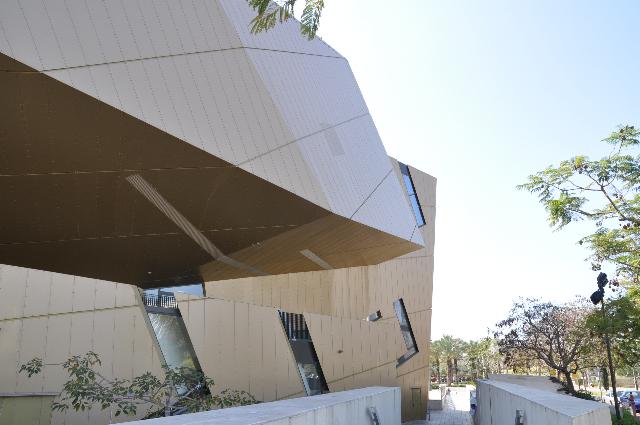
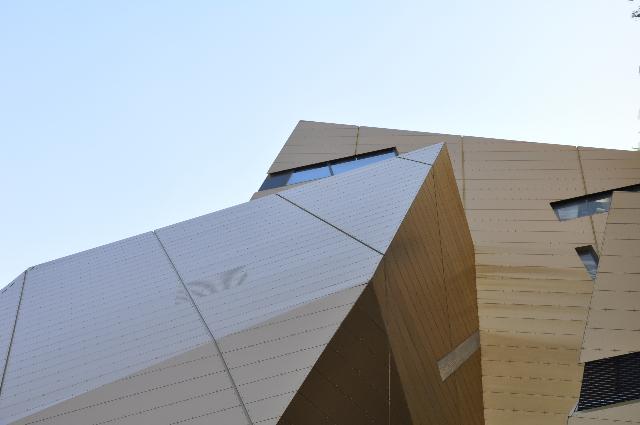

it has an indecent resemblance to another building… and a short check up shows that this one opened 4 years after the one in Berlin…
entrance foyer

the main hall


… (a slight disappointment) …
it is time to pack our bags; the stuff in the bags always resembles a ball on the way back, making it hard to believe how well ironed and folded it was a week ago! as I roll the ball-shapes described above, there is a single thought that makes me restless –
how, on Earth, is a country and a nation made out of nothing? I mean – we somehow survived the 500-years Yoke but we never left the land of our ancestors… and, although there is a religious barrier, we still have so many borrowings from the Turks in our so-called national identity… and so, if you think about it, there is not a single national peculiarity that continues to exist nowadays, that is purely and authentically Bulgarian (it is sad, I know; in Denmark they have legends and fairytales from the times of the Vikings) …while here, in Israel, there is not only a country, there are traditions (?!????), behavioral models, family, social, cultural specifics which separate the 6 million Jews from the surrounding world unconditionally – there is a nation (!); in 1948 Israel simply emerged from coacervate droplets as Jews came from all over the world and the country began to function? after 2,000 years?
I have had some suspicions in the last week and now, as we wait for our departure time, I find the strength to ask – was Hebrew spoken anywhere before 1948? the answer is harrowing – no.
dead
for the last 2,000 years
only rabbis studied it in order to be able to read the holy scripture; people in the synagogues in America, Ethiopia and France have herd sermons which meant to them the same as the Greek sermons to the Bulgarians or the Mass in Latin for the Italians
prior to 1948, Jews spoke the languages of the world…
The Tower of Babel
currently, everybody in Israel speaks Hebrew; the language has been revived for two generations (based on religious books, there is hardly anything else in Hebrew anyway) as if it has never vanished; there were stone engravings among the excavations we saw around Israel that were more than two thousand years old and modern Israeli read them as if it was the morning paper…
“…and in a few days, without saying a word/ the peoples moved centuries forward!”??? – Ivan Vazov
Posted: March 22nd, 2010 | Author: Gergana Milusheva | Filed under: trips and notes | No Comments »
you did not think that my list of Israeli architectural highlights was complete with Yad Vashem, the Calatrava bridge and the memorial in the kibbutz, right?! it is true that it was a short list to begin with but we still managed to check almost all of it out… and following is our visit to the remaining spots on this very list
the title of this post is, actually, quite inaccurate since Tel Aviv itself is a small administrative territory and the surrounding neighborhoods are called cities, no matter that in terms of size, it is like comparing Drujba to the center of Sofia; there are quite a few skyscrapers built in the center and the Jews do not miss a chance to tell you that the city is a “Little Manhattan… and even better-looking”.
which is not to say that you have a good chance to explore it unless you have a spare day to spend walking around since the traffic jams are absurd, there is no parking space available and public transportation is, put mildly, at an inception stage (a subway can only be a dream here!); a view of Tel Aviv from the neighborhood/city of Jaffa)
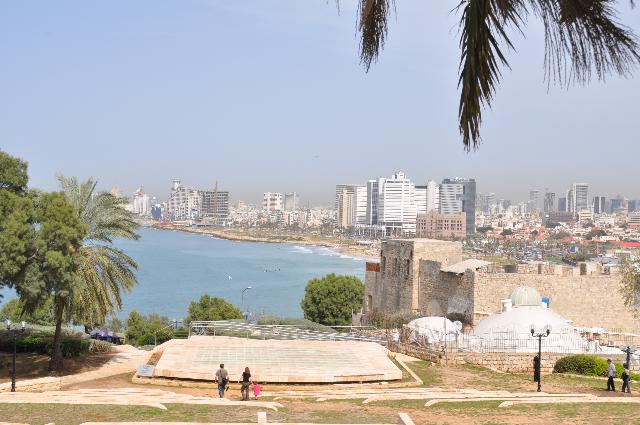
the shoreline is not used as a beach but there were surfers

Jaffa is the old town situated to the south of Tel Aviv, along the coast of the Mediterranean Sea; it has a characteristic atmosphere about it and after being a popular spot for suspicious individuals, it is now a renovated place inhabited by artists and a home to many galleries

narrow streets, antique houses and something green here and there in the form of palm trees


Tel Aviv shot in motion


many of the newly built towers are apartment buildings due to the widespread fashion of living in a loft with an empore… hmmm… on the 45-th floor in the center of Tel Aviv


besides the “Little Manhattan” definition, everybody wanted to inform me that the city hosted the tallest skyscraper in the Near East… but they were unable to show it to me ☺ the skyscraper architecture could not impress me much, so we moved on according to our plan
to the Design Museum, Holon
we arrive there in the day following its opening (even our kind hosts knew nothing about it, so they had to check online and they were really surprised I was right it existed)


we move towards the entrance with conviction, following this roofed mini-amphitheater

the ticket is a cute, tiny sticker:

the inside open space in front of the entrance

on to the small hall

the railing

the exhibition is dedicated entirely to contemporary design and it includes curiosity-inspiring models such as this one

and this amicable individual (take a careful look at it…)

the way to the second hall passes through a supple ramp around the open entrance space

and that way we get the opportunity to enjoy the sight of the curvy pergola


the second hall gets much closer to my rational understanding of museum space – clean, white, ceiling lighting and unobtrusive environment

I make use of the second lens on the way out in order to justify taking it along

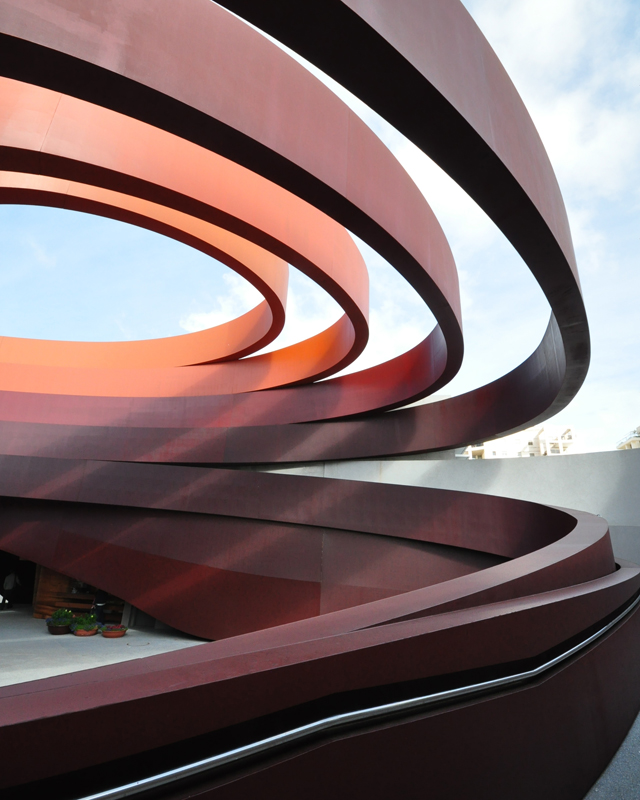

pergola for pergola’s sake
but it is still a design museum, making the colossal amount of steel lifted randomly in the air a bit more justified; just try to make a similar one in Bulgaria!
a pitiful attempt of illustrating the shape formation process ☺

(Ron Arad)
and we continue to the next destination on the list
Peace Peres House
the place chosen for this turned out to be amazing
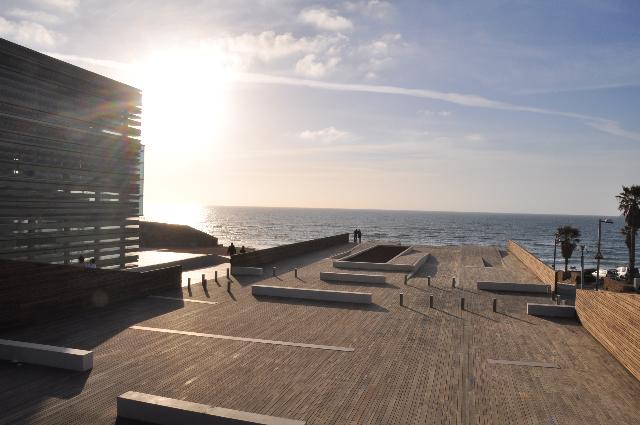
the building is the bulk on the left hand side of the picture but the open square with the wood flooring is no less impressive
but the story of the building is a sad one
Peace Peres Center is a Shimon Peres initiative (you have heard the name and I will just add that in 1994 he got the Noble Peace Price together with Yasser Arafat and Yitzhak Rabin) for the socio-economic unity, the cross-cultural dialogue and, as the name suggests, peace in the Near East.
the author of the project is 


it makes you wonder how a house that small engulfed that much money, eh?! we had no chances of getting inside but you can see pictures of it  ,
,

the sunset above the Mediterranean Sea is short yet memorable – for ten minutes you feel like you are inside a postcard

to be continued…
Posted: March 19th, 2010 | Author: Gergana Milusheva | Filed under: trips and notes | No Comments »
our journey around the ancient city began and will end with modern architecture
I have done my homework and this place is on my short “do not miss!” list of modern architecture spots around Israel; well, we are not going to miss it; we cross Jerusalem once again and the last rays of the setting sun shine over the door-keeper’s face who asks us where we come from; the answer “Bulgaria” works like “Open, Sesame” and triggers a shining smile…
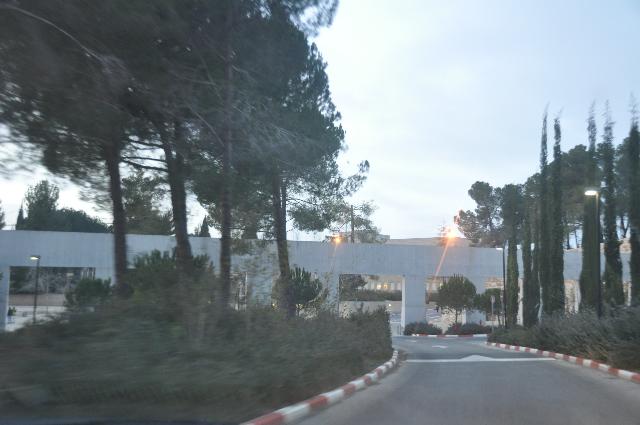
we pass under the arch and we find ourselves here
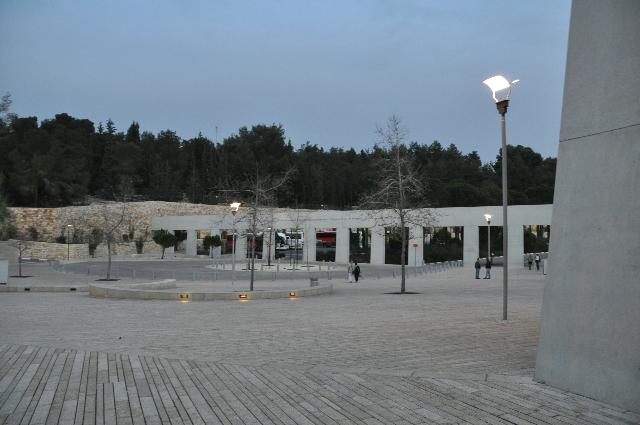
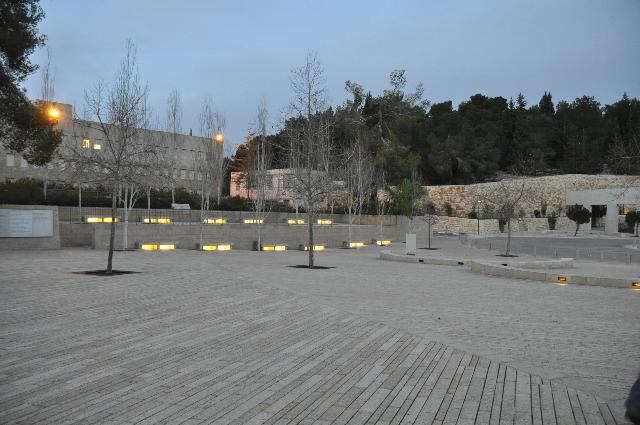
it is already 6:30 pm but we have come on the only day when this place works until 8:00 pm; awesome! wiki explains the meaning of Yad vaShem with the following passage from the bible:
“And to them will I give in my house and within my walls a memorial and a name (Yad VaShem) that shall not be cut off.”
A Memorial and a Name.
The Holocaust.
(from Greek: holos – complete(ly), kaustos – burned)
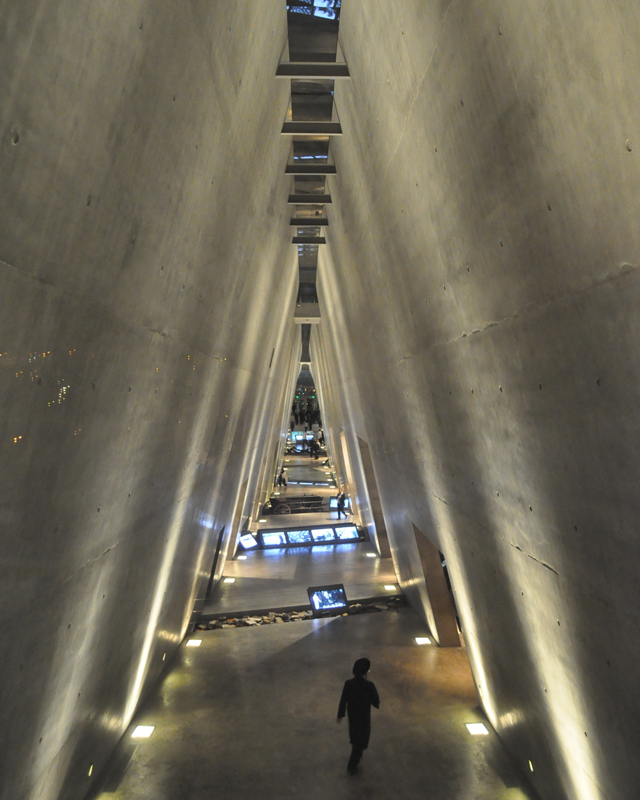
it is difficult to describe a place such as this one; you have to experience it; this distinguishes good architecture from the rest… I will spare you my impressions of the exhibition that we, literarily, passed by on the run and I will show you some pictures (some of them not mine – picture-taking is not allowed inside)
the reception building with a front desk, wardrobe and a café…
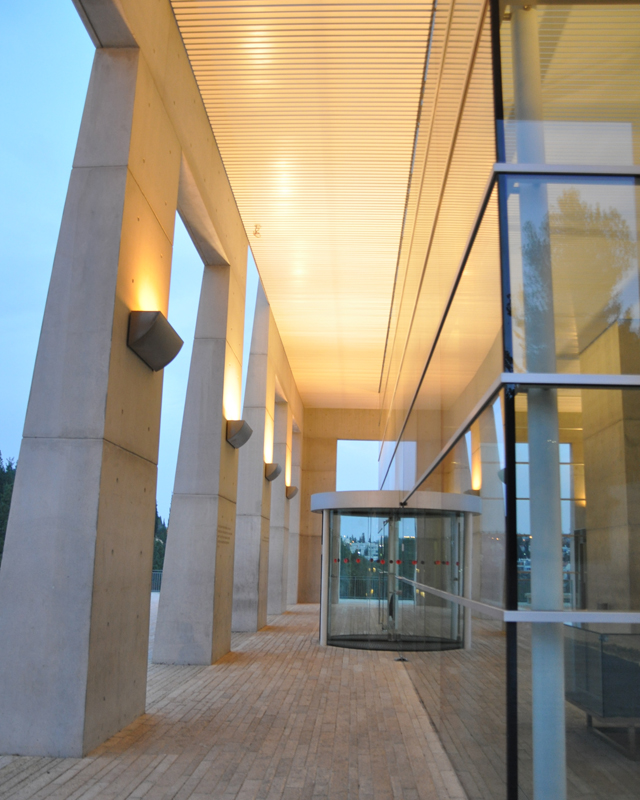
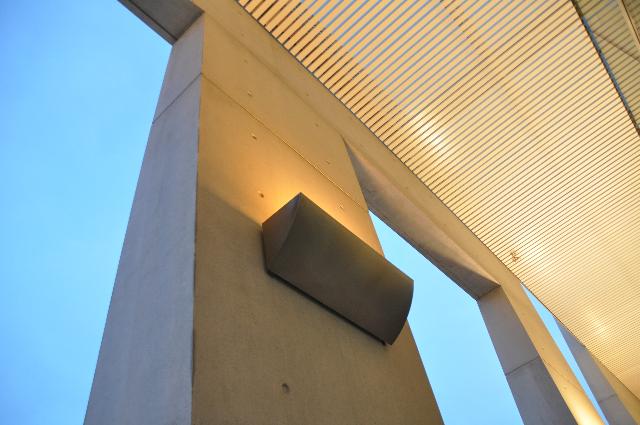
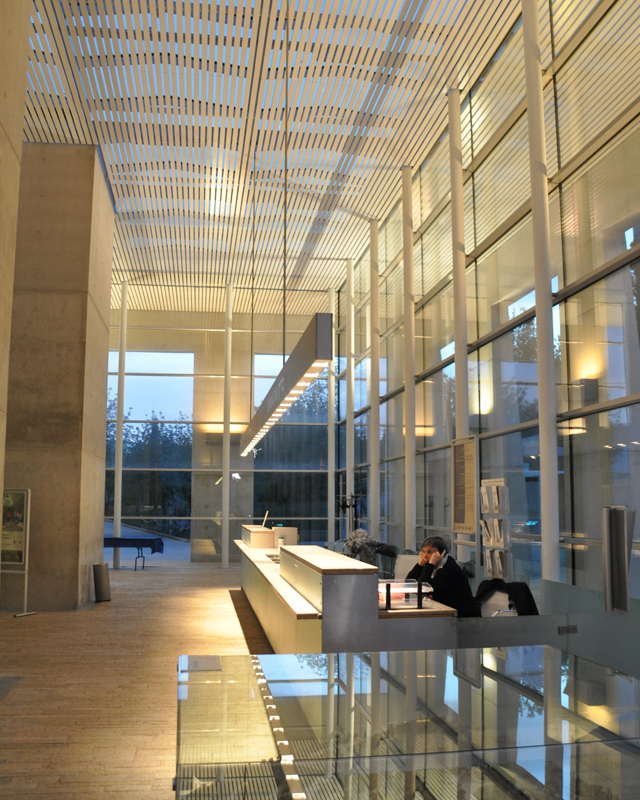
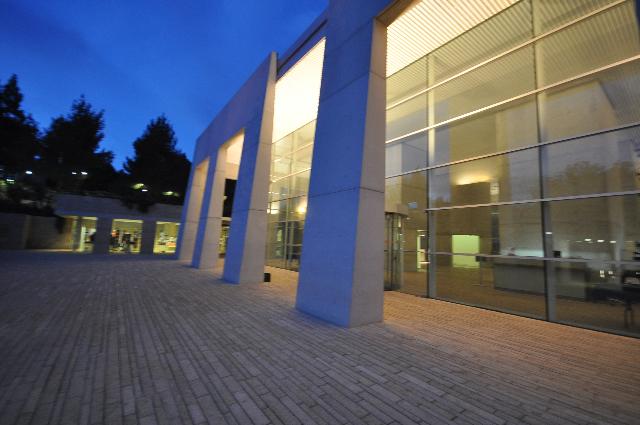
it is a transit building; on the way out, this is what we find in front of us
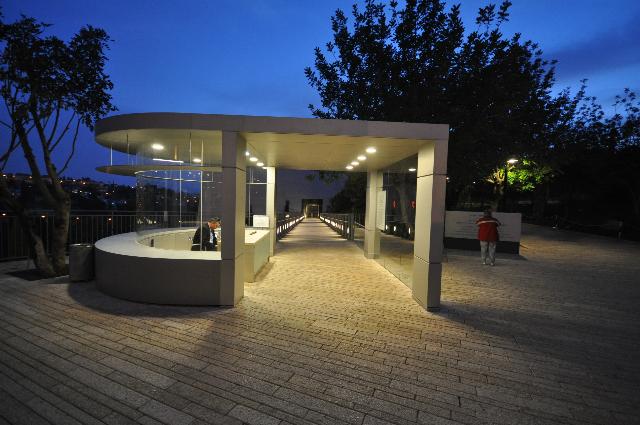
this could be seen at a different time of day
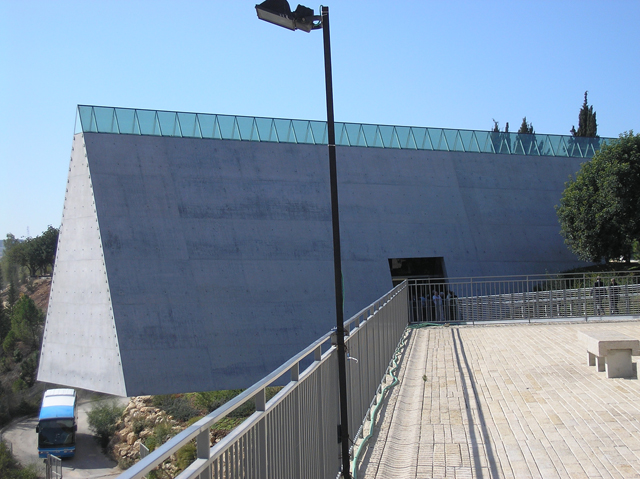
but this is the view we see
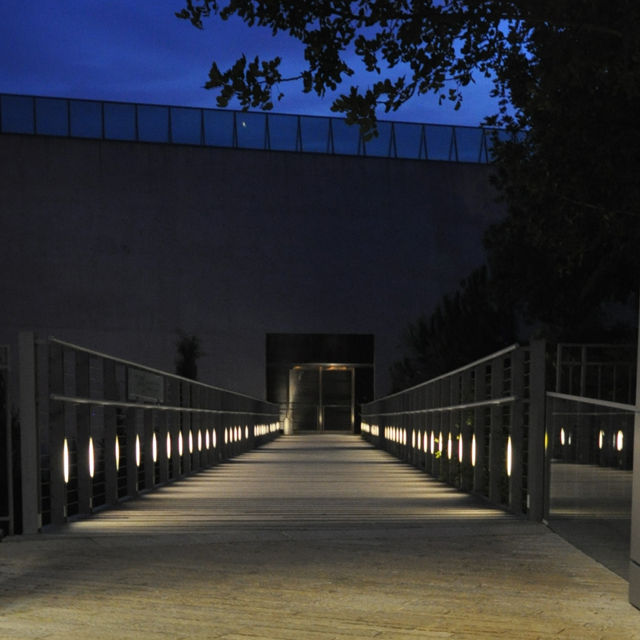
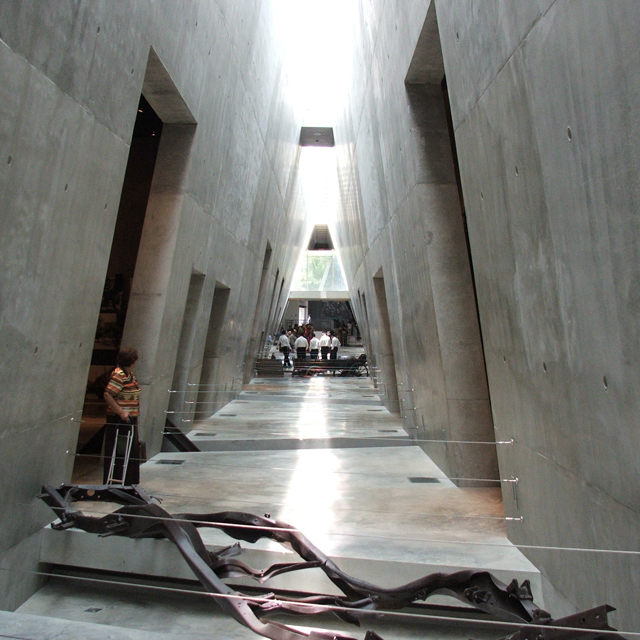
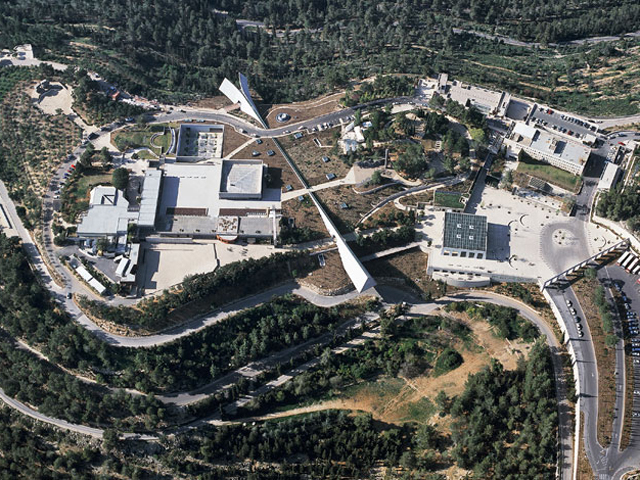
the complex looks like this from above
and, of course, we cannot do without a blueprint
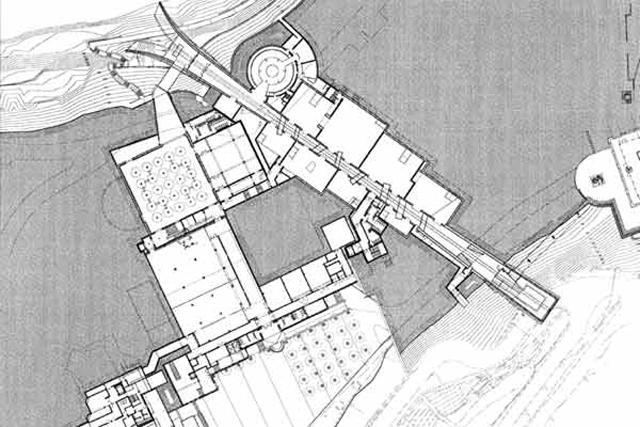
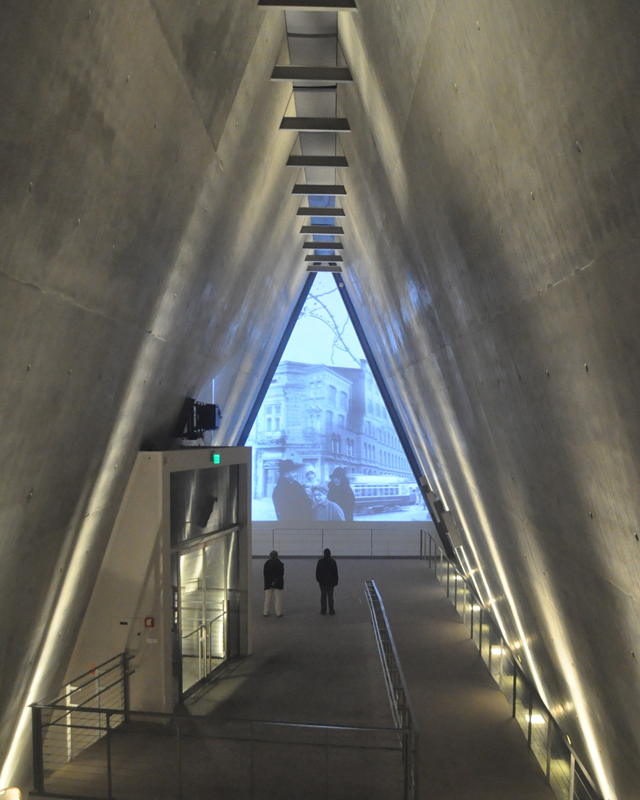
the exhibition goes in a zigzag through the triangular tunnel
shortly before the end of it, there is the round hall, to the right
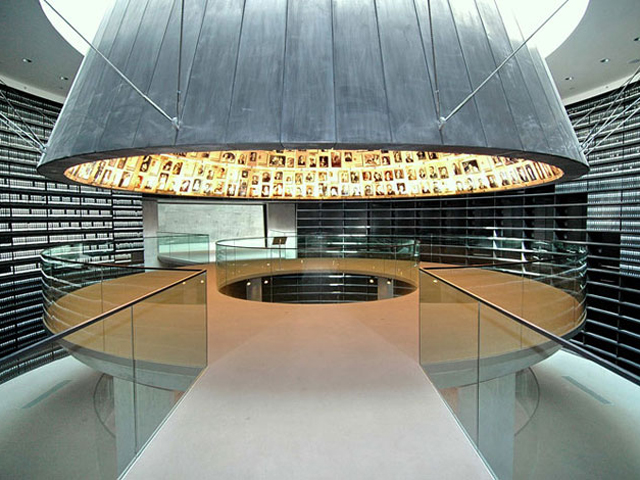
the cone, looking up

there is a deep well underneath as if carved out of the rock (I could not find a picture of it)
there are black file-cases with alphabetized names in them arranged on the shelves around the periphery of the hall…
the author
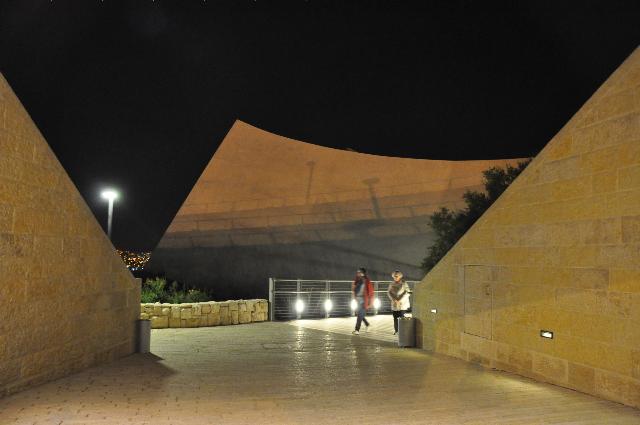
the exit
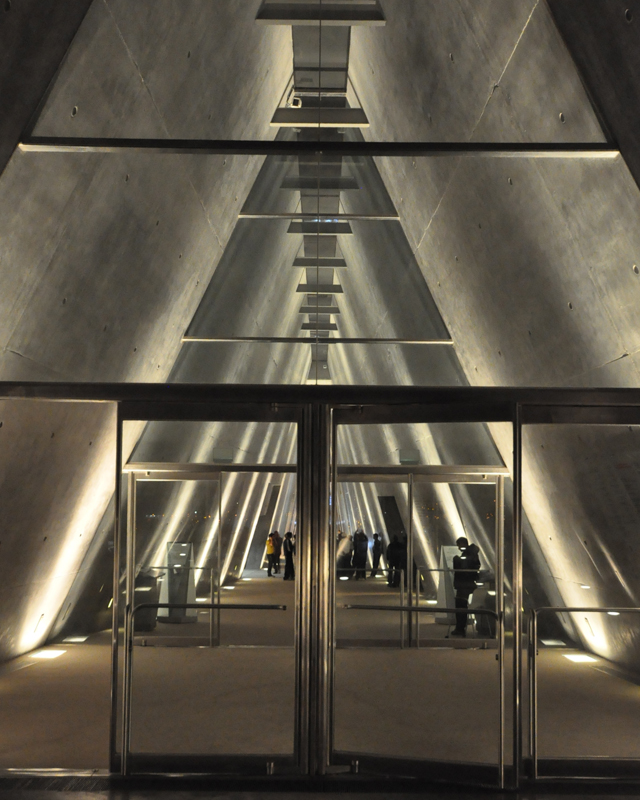
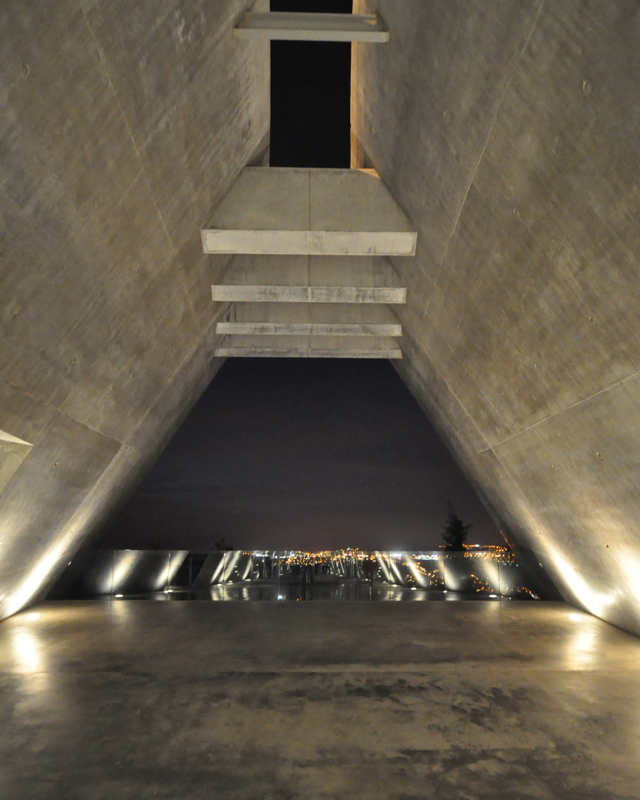
night-time Jerusalem is on the other side of the glass railing
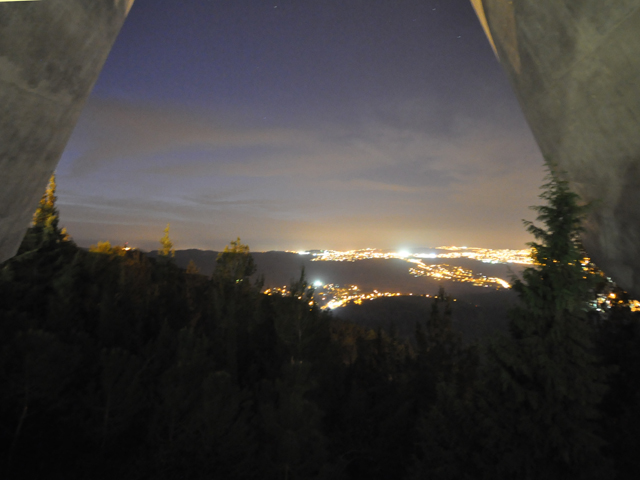
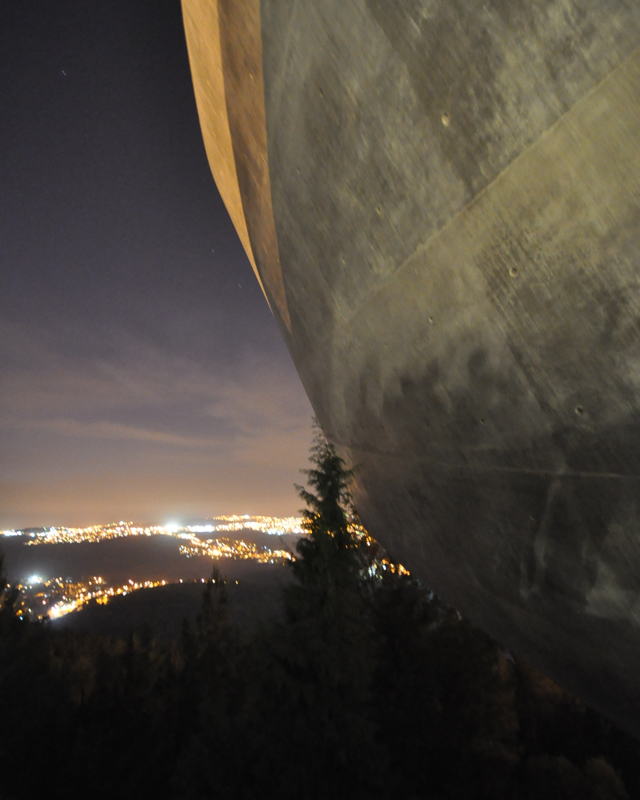
we would have seen this during the day
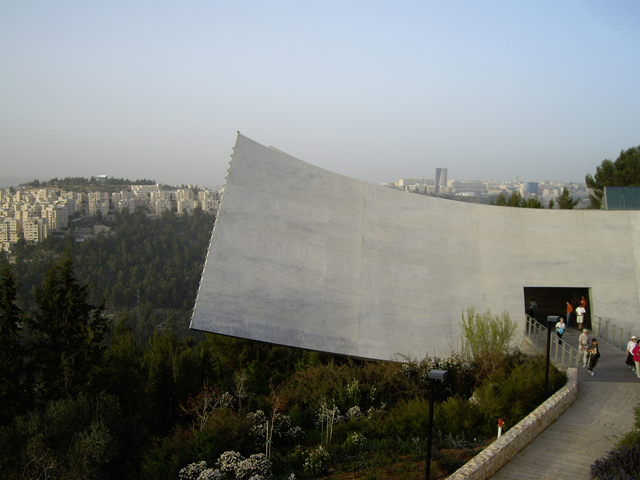
(the night view was worth it, right!)
the way back passes through this garden which is surrounded by tall walls (hmmm, I wonder why they remind me of another garden in distant Berlin…)
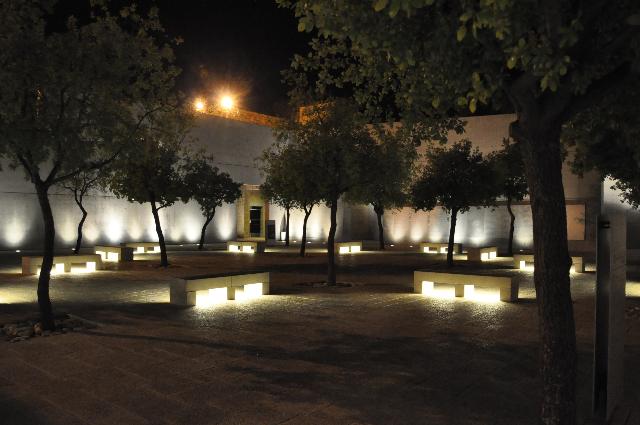
on one side of it, there is an entrance to a synagogue
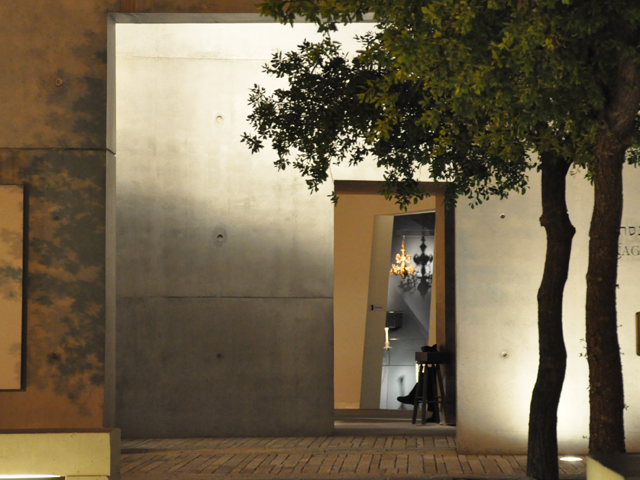
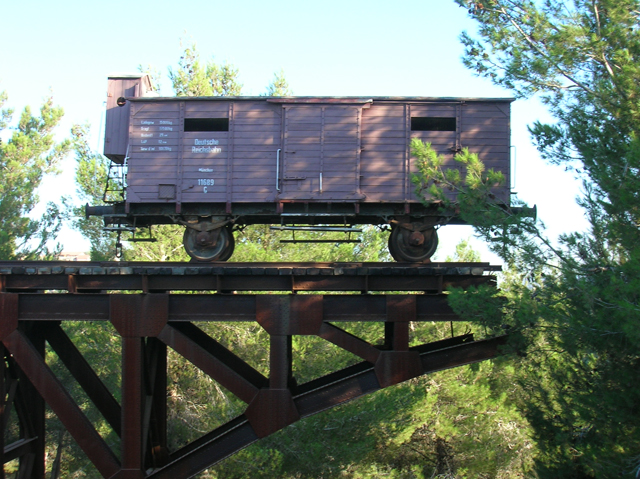
there a multiple buildings (big and small) as well as memorials and sculptures (like the one below) scattered around the territory of Yad VaShem
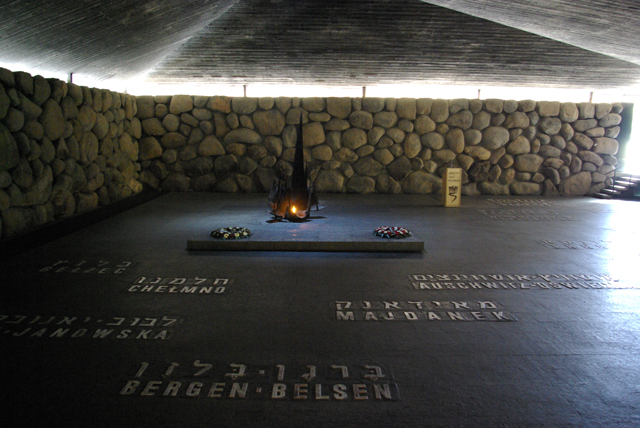
and an eternal flame hall
no visit to Israel would be complete without a visit to this museum.
and the road of modern-day Israel passes right through the middle of it…
to be continued…
Posted: March 16th, 2010 | Author: Gergana Milusheva | Filed under: Uncategorized | No Comments »
Thursday is the day for becoming a Hadji
we head for Jerusalem and this time we are without a guide but we are armed with paper maps and we try to watch carefully for the street signs; our GPS map was so incomplete that we took it just to make sure we were in the right part of the country (only later did we realize that we could have used the track we made on the way there in order to come back the same way – almost like Hansel and Gretel and the white stones in the forest at moonlight…)
Jerusalem is about 60 km away from Tel Aviv; a colossal trip no doubt!! the highway takes you there directly and, of course, there are plenty of signs in Hebrew, Arabic and English.
this greets us at the highway entrance

the bridge was built to commemorate the 60th anniversary of the foundation of modern Israel – the construction began in 2005 and it was finished in 2008 (meaning… on time); it is known as the Bridge of Strings but locals call it the Harp… and it is quite unnecessary to tell you that it is Santiago Calatrava’s work; the height of the pylon is 119 meters, making it the tallest man-made structure in the Holy City; it is valued at more that 40 million euro….
unfortunately, there is no place you can stop and take a picture of the bridge and the only other shot I managed to get on our way back is here here; traffic…
we cross the entire city of Jerusalem in order to reach the old part of it which is situated on the opposite side; it takes us about an hour; on the way:


we are slightly nervous as we reach our destination but, luckily, there is a nice underground parking at the entrance of the old town

from there, we exit at a small square in front of the wall, right next to the entrance; the men can relax now…

I have to admit that I was not prepared for what followed

this street is one of the wider, main ones!

occasionally, there are these openings to the sides

there are barber shops in some of the stores

we take a side street in order to avoid all the stores where most of the crowds of tourists stop regularly and block the street


in a few turns to the right, then to the left, through a passage and a dark tunnel, we get to a police woman with a security metal detector (similar to those at airports) and, voila, this should be it, so they check us and we go through; suddenly, we find ourselves at the big square in front of the “Western Wall”,

better known as the “Wailing Wall” in Bulgaria.
there is no way we can go without a little bit of history this time as well; this is a sign we found at the square

and history is, roughly, the following:
in 3300 BC Moses took the Jewish people across the Red Sea and the desert to Canaan;
in 3000 BC David and his son Solomon built the first temple here; the temple was on top of of Jerusalem’s hills, it could be seen from afar but they constructed an additional “pedestal” of four massive walls for it; the place is known as Temple Mount
in 586 BC Nebuchadnezzar destroyed the temple and took over the territory (during the time of Babylon’s existence)
in 538 BC they build the Second Temple at the same spot where the first one used to be and so there was peace for the Jewish people for a while as they communicated skillfully with the Greeks and then the Romans, until:
in 135 BC Emperor Hadrian put down several rebellions and banished the Jews from the city, renaming it to Aelia Capitolina while the province was called Syria Palaestina instead of Judea; and so the 19 century long Jewish diaspora began.
since then the Jews pray on the western outer wall of the city which was also the western wall of David’s temple – they wail because they were banished (that is why it is also called the Wailing Wall)…
the city did not seize to exist in the next 19 centuries, however; it was owned by the Byzantine Empire, Persia, the Byzantine Empire again, the Arabic Caliphates, the Crusaders, the Tatars, the Mongols, the Mamluks up until the end of the 15th century, the Ottoman Empire and Britain; everyone left a mark in terms of culture, religion, state policy… it is one of the oldest cities in the world.
although nowadays Jerusalem is the capital of Israel and the entry restrictions are long gone, the western wall is still the Place for prayer; the wall is divided in two: the right part is for women and the left one for men

the part for the women

like the other women, I climb up a plastic chair by the wall in order to peek on the other side, where the men’s part of the wall is


there are some micro rituals in the men’s part of the wall, celebrating the coming-of-age of 13 year-old boys (Bar Mitzvahs); at certain points during these rituals, the women stick to the wall and they start shouting/chanting really loud; they make a very particular sound that, unfortunately, I cannot describe and it does not resemble anything in our sound culture.
there are small tables in the women’s enclosure

and there is a library on the side in case you did not prepare everything you needed in advance

this did not surprise me

but the following really shook me


the average age is how much… 15?! 16?! and no, this was not a group of school kids on a day trip; they came and went in groups of 2-3 girls, they were touching their heads to the wall giving me the chills…. of course, they also wrote their wishes on a piece of paper; the wall is covered with these

when the space runs out, they get pushed by the next entries and they end up here

a superstition says that you have to leave just the way you came in; this is why these two girls are, actually, walking aback

we also go out, although not aback ☺
there is something like a library in the men’s enclosure too but it is much more impressive in size (this is where I should than the producers of Blackberry for creating a phone with a not-that-bad camera – otherwise we wouldn’t be able to see this place)


there are vertical shafts in the floor of this ancient place (I did not understand when they were dug out), covered with glass where you can see the base of the wall and it continues for some 20 meters underground


in the 21st century, the square in front of the Wailing Wall actually serves as a synagogue
there was a very basic question that did not give me peace the whole time: since the city is theirs once again, why do they continue praying next to the Western wall? Why don’t they dig up the old temple and rebuild it?! or, at least, pray where they used to pray 20 centuries ago even if they do not build a new temple (because, let’s face it, right now they are praying at a wall)….
the answer was right in front of me all the way but we had to go down to the excavations on the north side of the city in order for me to realize it.
the north side of David’s temple (which was also an outer side of the old town) has been carefully excavated by archeologists; there were many antique layers found around and in front of it; these are open for curious visitors such as ourselves, so we go in


a typical contemporary museum with signs, audio guides and a picture of crossed-over camera at the indoor exhibition…

this is the northern wall; there is an excavated grand staircase from the times of the second temple, in front of which we come upon a group of school kids accompanied by:

we take a break and sit on the stairs

I find myself eavesdropping on a tour guide who is explaining why the stairs are so uneven – some of them are narrow while others are wide; the explanation captivates me – it turns out the stairs were built this way in order to be in the rhythm of the pilgrim song that the Jews used to sing while climbing to the temple…; I continue to eavesdrop; and then THE ANSWER of That Question slapped me in the face: on top of this Jewish sacred place, over the fundaments of David’s temple, over the rock which is the base of the world, there is a – what?!! well, a mosque.
Dome of the Rock was built in 691 AD and has undergone very few changes ever since until 1993 when King Hussein of Jordan paid for its complete renovation, including the 24 carat gold dome; the very same rock the base of the world is situated in the middle of the mosque; Muhammad left a footprint from his sole in it when he ascended to visit God according to Muslims…
the Mosque dominates all panoramic pictures of Jerusalem

(the picture is taken from here)
and it can really be seen from everywhere…

the tour guide continues on this topic – how unfair this is, how Muslims can do whatever they wanted while Jews who had been there first and it was all theirs once upon a time – nope! they cannot not move a pebble in the Arabic part of the city… so I stop listening in total awe of the historic irony…
we jump to our feet and we head up with the only goal to reach the mosque; we have to go back to the synagogue/square again because the entrance to the upper platform is on the other side, the inner part of the old town (nowadays the famous grand staircase simply goes into the wall and stops there); checkpoints once again, security metal detectors, the sun-heated synagogue/square, the dark tunnel and back to the never-ending labyrinth of tiny streets and shops…
no luck, though! there is no access to the mosque and the entire upper platform due to a huge crowd of children; there are young men sitting on the stairs to the entrance armed with carabines who are patiently looking right through me, saying closed, sorry… OK, sorry, we head to the Christian part of the city.
Jerusalem is divided into four parts (roughly through the middle in geometric terms): a Jewish, an Arabic, a Christian and an Armenian one; are you surprised by the last one, eh?! in order not to elbow our way through the main street we turn to a smaller side road once again; some 3 meters ahead, we literarily get into a different world – the Arabic part’s residential building district

a youngster similar to this one immediately sticks to us and tells us with his vocabulary of no more than 10 English words “I will show you the way in exchange for money”; we pretend not to hear him and in a few turns we find ourselves in the middle of a food market

the meat is displayed the same way the spices and vegetables are; there are all kinds of liquids oozing down the middle of the stony ground; the smell makes your head spin…
suddenly, the market ends and the street spits us out into the light; it is a totally different atmosphere

wide streets, arcs of firm, shaped stone, better decorated stores and more space; there are Russian signs and Russian-speaking people here and there; a round square with a fountain where six small streets cross at right Renaissance angles (well, two of them don’t lead anywhere but still)…

the Christian part of the city is so unnaturally relaxing and full of European spirit that we even consider having coffee in the square by the fountain; after the espresso, it is time to visit the Tomb of Christ; if we can find it, that is…
we make a few rounds up and down for about 200 meters and after passing under a low arc of a narrow street, we find ourselves in this yard

there are no signs
the greatest Christian relic, the Tomb of Christ, the place where Jesus was crucified, buried and where he returned to his bodily life… can easily be bypassed for being the next old, local building if you even get to find this inner yard with a single entry/exit by a lucky coincidence.
these were too many slaps in the face for the day, for real
inside, everything is just an open space, a yard with no fence; we obtain information about what is where by observations and deduction techniques – where there are more people crowded, where there is a queue, what the strange things inside seem to resemble… I am not saying that they should put signs on Golgotha, but a tiny information center could have helped a great deal; it is humiliating ☹
luckily, there are Hadji among us, so they educate us (Niki and me that is) about the place
the open doors at the end of this square lead to this stone placed on the ground right after the doors

His body was placed there when they took him down from the cross; people put oils on it and kneel by it with their hands relaxed on the stone
we go left following the crowd and we reach a larger hall which is evidently from a more recent period

the queue is going around the mini temple in the middle; according to the official dogma, This is the Tomb of Christ; it seems a bit foolish, however, since they keep only two pieces of the rock plates which were used to close the cave inside …
there is another entrance opposite the entrance of this temple and it takes us to a larger, active temple which looks surprisingly Orthodox

we go around it to the left, where we find a small Catholic hall with an organ and a confession room (the wooden door on the left at the end there – the signs say that you can have a confession in Italian, English, Spanish and Portuguese…)

the hall

the side nave

there is a low-ceiling hall at the far end but we did not figure out what it is used for

we continue our tour and we come to this staircase leading downwards

we come upon another church, this time an underground one

and there is another staircase leading downwards, so we descend to the bowels of the earth


the hall is a natural cave in the rock which has been shaped in later periods; this IS the cave where He was buried

be it for the very few people down here, the silence, the Spartan-like atmosphere or simply the huge rock above, this place impressed me the most; there was something divine down there, almost palpable… and if becoming a Hadji means getting in touch with this feeling – well, then I guess you can call me a Hadji.
we climb up the stairs and we find another staircase leading up just to the left of the exit; they are steep and worn out and they take us here:
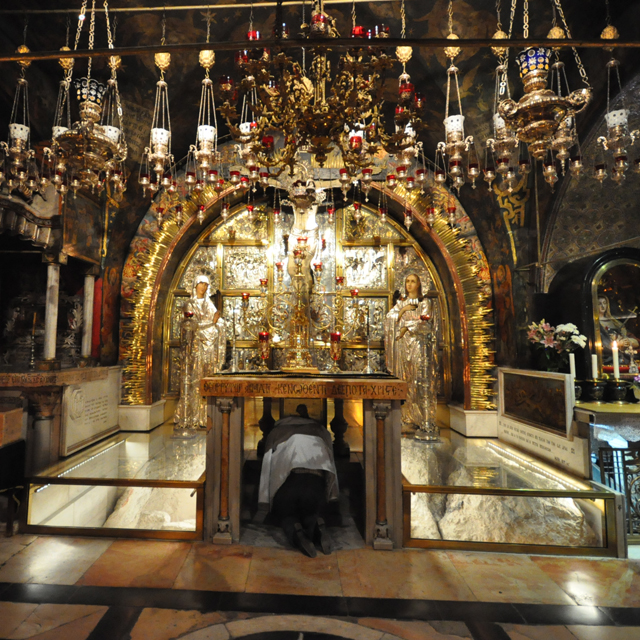
Golgotha
the place where he was crucified
the only thing in this clustering of a church within a church on top of another church which is not directly accessible to the pilgrims, is this rock under a glass ceiling; it looks as if the rock is coming out of the floor of the room and it leaves me under the impression that the churches are, actually, build ON TOP OF Golgotha, one over the other…

people are queuing in order to go under the table and touch the base of the gilded crucifix; does this remind you of anything?…
time to go; we sit at the square in order for me to satisfy my hunger for nicotine
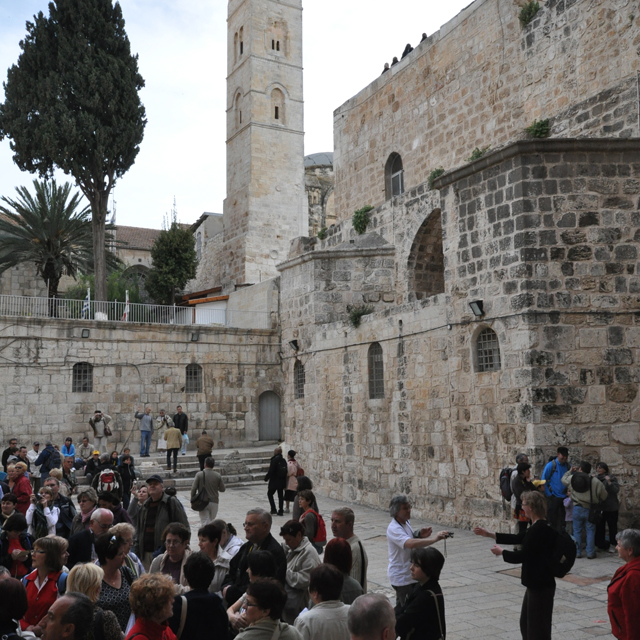
half of these people wear a sign saying “Piligrim”
and there are those among them too

right next to us, there are a couple of arab guys and suddenly this young man comes running out of nowhere


we head for the exit; we get this exceptionally melodic souvenir from Jerusalem on the way out:
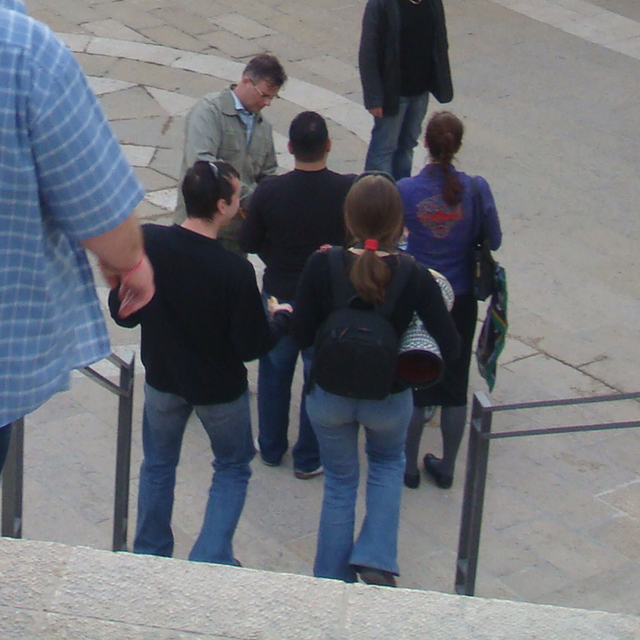
I wasn’t able to remember the name of this little drum but the sound it makes is really amazing… uhhh, the walk to the car was sufficient for everyone to ask me to leave it in the trunk ☺ at least for a while
at the square in front of the entrance, there is a charming Arab man and his son selling sesame pretzels and they are superb in their own Arabic way

I leave the ancient city of Jerusalem with some very intense impressions and even more questions left unanswered
следва
Posted: March 11th, 2010 | Author: Gergana Milusheva | Filed under: trips and notes | No Comments »
I have hardly had time to open my eyes and we are already on the road. We go north, along the shores of the Mediterranean Sea. Our first target is planned out by our kind host – it is the antique city of Ceaserea

the city was blossoming at the time King Herod was a ruler (yes, the same one you are thinking of and yes, at the very same time), and as one of Rome’s vassals, it had all the characteristics of Roman urban planning and construction, including amphitheaters, thermae, aqueducts, temples, orthogonal street network; Vespasian was proclaimed an emperor in Ceaserea; a Roman legionary in black:

Herod’s amphitheater – right at the shore as the action took place right under the natural décor of the amazing Mediterranean sunset

the foundations of the typical Roman baths


and the beautifully preserved vault arches of stone:

as well as the all-so-beautifully preserved Roman cats

the winds of change have not been mercyfull to the city throughout history – it has been a property of the Romans, the Byzantines, the Arabs, the Crusaders until it was finally destroyed by the Mamluks in the 13th century and forgotten ever since; until the antique rush in the end of the 19th century.
some parts of the Ottoman fortifications with a few contemporary interventions on top


this is quite a weird interpretation of the phrase “preservation of architectural heritage”


and this is from the Crusaders era (an amazing vault arch that looks incredible at person, especially when you imagine it being there for the last 1,000 years)

we find an ATM at the exit and we decide to get a few shekels – the currency of Israel
a hundred shekels are the most common bills

three shekels are a dollar and 5 are about an euro; the bills are not made of paper but of something resembling a really thin plastic/vinyl.
we continue north
the city of Haifa is a seaport and a promising destination since it is built on several hills along the shore which relax my tired-of-the-flat-terrain eyes; our aim is to get to the The Bahá’í Gardens:

which are closed for some reason so we manage to get a quick peek into a small portion of them

and we move on; also, it is already lunchtime…
(Bahá’í Faith is the newest religion; read more about it 


a brand new living room-bar


and, of course, the reason why we came to this kibbutz exactly (you seemed to be suspicious there for a moment…):

authors: SO Architecture (be patient, the website is in Hebrew)
this place, this kibbutz, was the best thing in Israel; I am not joking!; the atmosphere, the people, the alleys and the small houses surrounded by vegetation with their terraces looking like a lawn and the children racing with their bikes around us, and the feeling of utter calm… as if time has stopped; it reminds me of my childhood…
kibbutzes are running out of fashion nowadays because the globalization, progress and consumer society are booming in Israel, making communes unnecessary.
we continue east, towards the Dead Sea; the sun sets and we reach the River Jordan at dusk; if you are going to Israel and you can skip this part – don’t give it a second thought! the supposed place where Jesus was baptized is a fanaticized tourist destination which has an air of entrepreneurship and money-making around it – nothing else.
the river itself is much more interesting – an oasis in the desert; the river flows from Mount Hermon (somewhere in Lebanon), it passes through North Israel, it creates the Sea of Galilee and after it drains away from it, it creates the border between Jordan and Israel / the occupied Palestinian territories / the West Bank and, finally, runs into the Dead Sea, some 450 m. below sea level; in fact, the name “West Bank” which is all over the news in the last few years, means “the west bank of the River Jordan”; if it was not for the river, the vast territories around, belonging to five different countries would have been deserted; making use of the river’s water is so massive and ubiquitous that at this time the river literarily vanishes before it reaches the Dead Sea; the river vanishes but the conflicts around it remain.
to be continued…
Posted: March 9th, 2010 | Author: admin | Filed under: trips and notes | No Comments »
In case you are still wondering, Cannan is The Promised Land, the foot of the world. Or at least, this is what the Old Testament says, the Torah which Jewish people believe in…
3300 years before Christ (this is a really indecent dating, having in mind that They do not consider Him The Messiah) Moses theatrically led the Jewish tribe through the Red Sea, then they crossed the desert heroically in order to get There – the land which God promised to be theirs forever and ever…
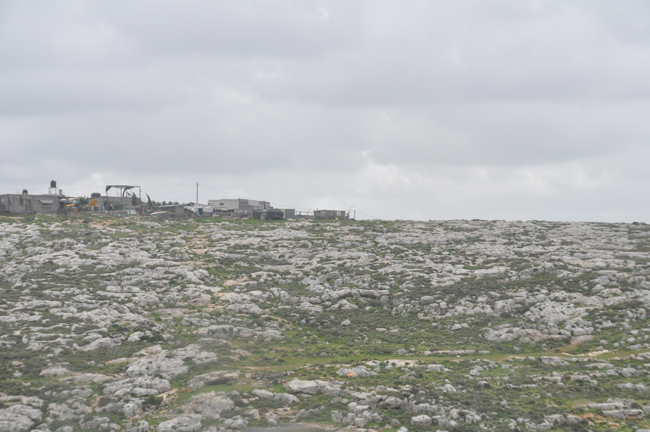
what a land, indeed, eh?!! – Israel, nowadays
I will tell you about the state of Israel in the 21st century; which inevitably means stories about the Diaspore (dispersion of Jews), the Holocaust, military presence, religions, a little bit of ethnic tension and a lot of history…
This time (like never before), we are paying a visit, going to a wedding! to be honest, so there is a little bit of an inside story as well…
Our flight to Tel Aviv is at 11 AM and they have warned us to be at the airport 3 hours prior to departure, so we arrive at Departures at 8 AM with sleepy eyes. The check-in is open. There are enclosures in front of the desks (they take up half of the main hall) and immediately after you pass them, an amicable young man appears and starts asking weird question, writing down the answers diligently on a small sheet of paper. Is this your first time travelling to Israel? Are you travelling alone? What is your relationship with this person? Did you pack your bags on your own? Where were they after you finished packing them and up until now? How long have you been together? Is there something belonging to somebody else in your bags? Are you bringing something for somebody else? Did you pack your bags on your own? …. they say that currently things are much less complicated compared to a few years ago. But still… Check-in. And they postpone our flight with two and a half hours (I suspect – on purpose).
We arrive in Tel Aviv in the evening after spending the entire day in international territory both in airports and in planes.
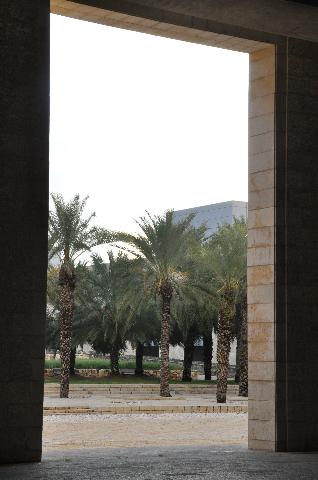
25 ˚C, palm trees and a blue sky
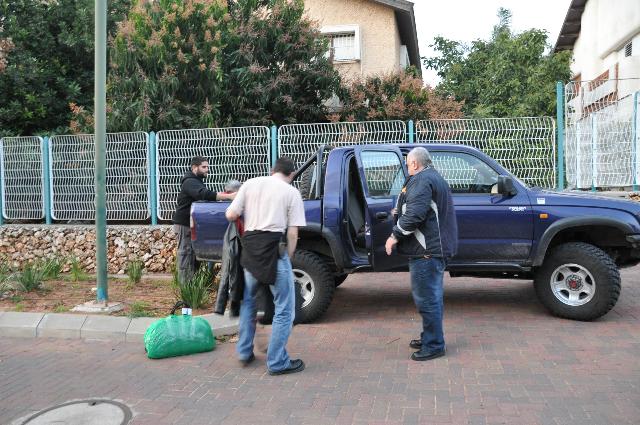
a warm welcome and a short walk to the nearby shopping center before it has all begun (all the eating)
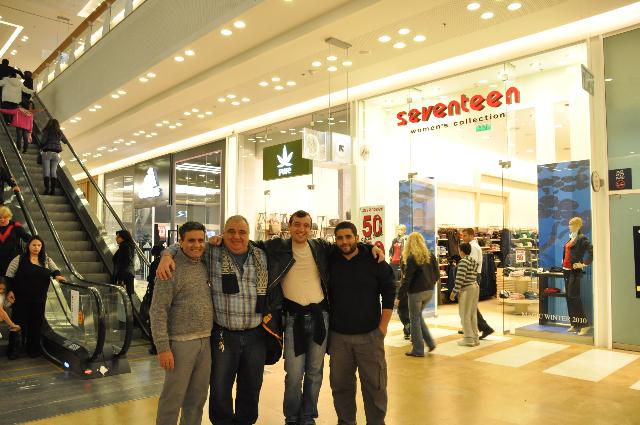
actually, I am the only woman at this dinner; the wedding is on the day after tomorrow and this evening the men and the women are divided – a bachelor and a bachelorette parties which take place in the house of the groom and the bride, respectively; the party for the men is simply a big dinner in an even bigger company – the proud father of the bride, his brother, his uncles, his friends, his levy buddies… and I. (!) dinner finishes in the backyard with a shisha, waiting for the female part of the family to come home.
things are quite different for them (the female members of the family); they all go to a special place where the bride is “cleansed” before the wedding
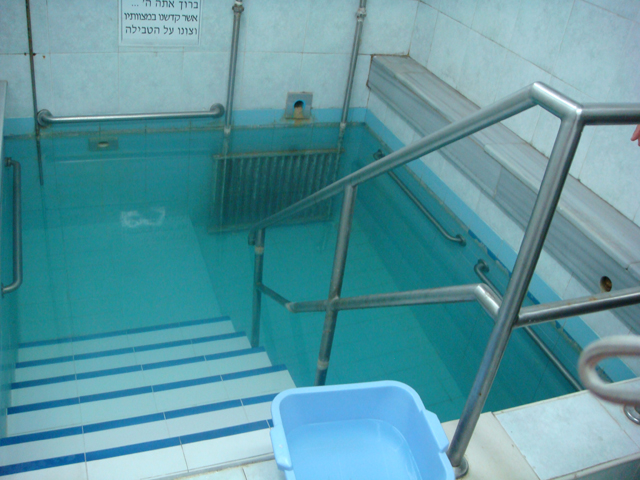
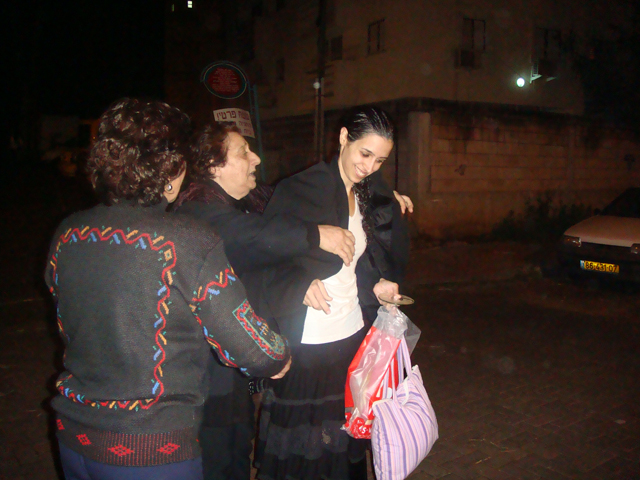
(it is warm, so, luckily, they do not manage to give her a cold)
what follows is a typical henhouse
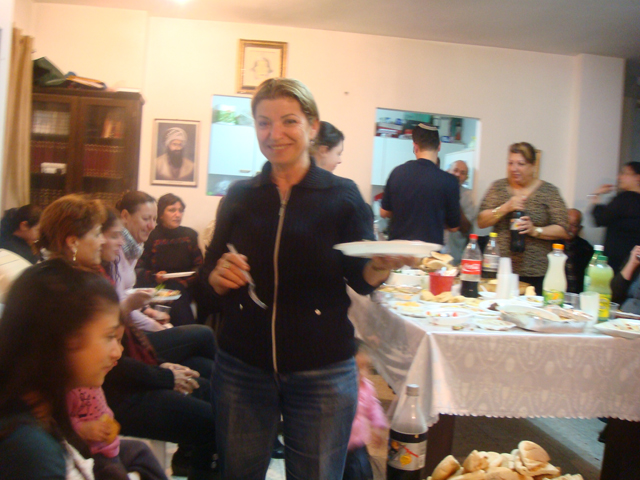
all of the smaller children who cannot take care of themselves are also present
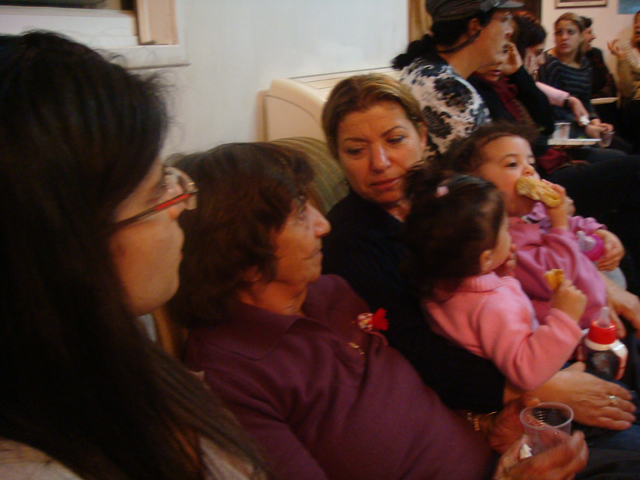
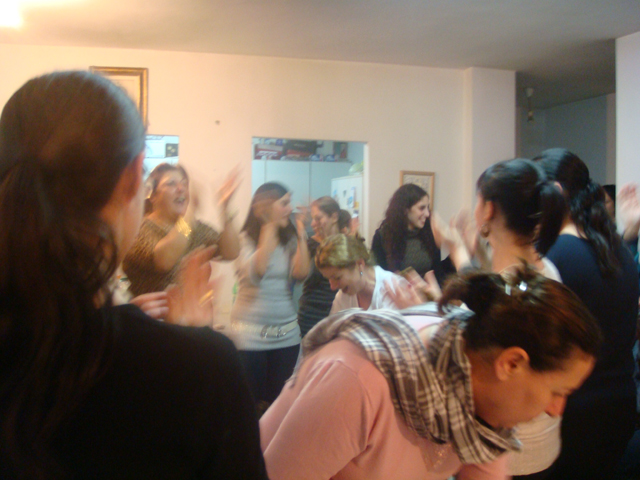
the women come back and we make a plan for the next day over a great cup of tea which includes a really early rise, so we go to bed!
the Jewish breakfast is a healthier version of the Jewish dinner:
– an unlimited array of fresh vegetables,
– cream cheese with relatively low fat content (5% on average and a maximum of 9%),
– omelet with A LOT of leek and something else, green again,
– a strange, but quite tasty, yellow cheese / European Swiss cheese variety which is very finely cut,
– some kind of yogurt (poor me! I stayed hungry on the first morning),
– nescafe.
do not drink the coffee. choose tea. they make it much better.
still, there is espresso at the cafés if your soul simply cannot survive without this magical drink…
to be continued…


